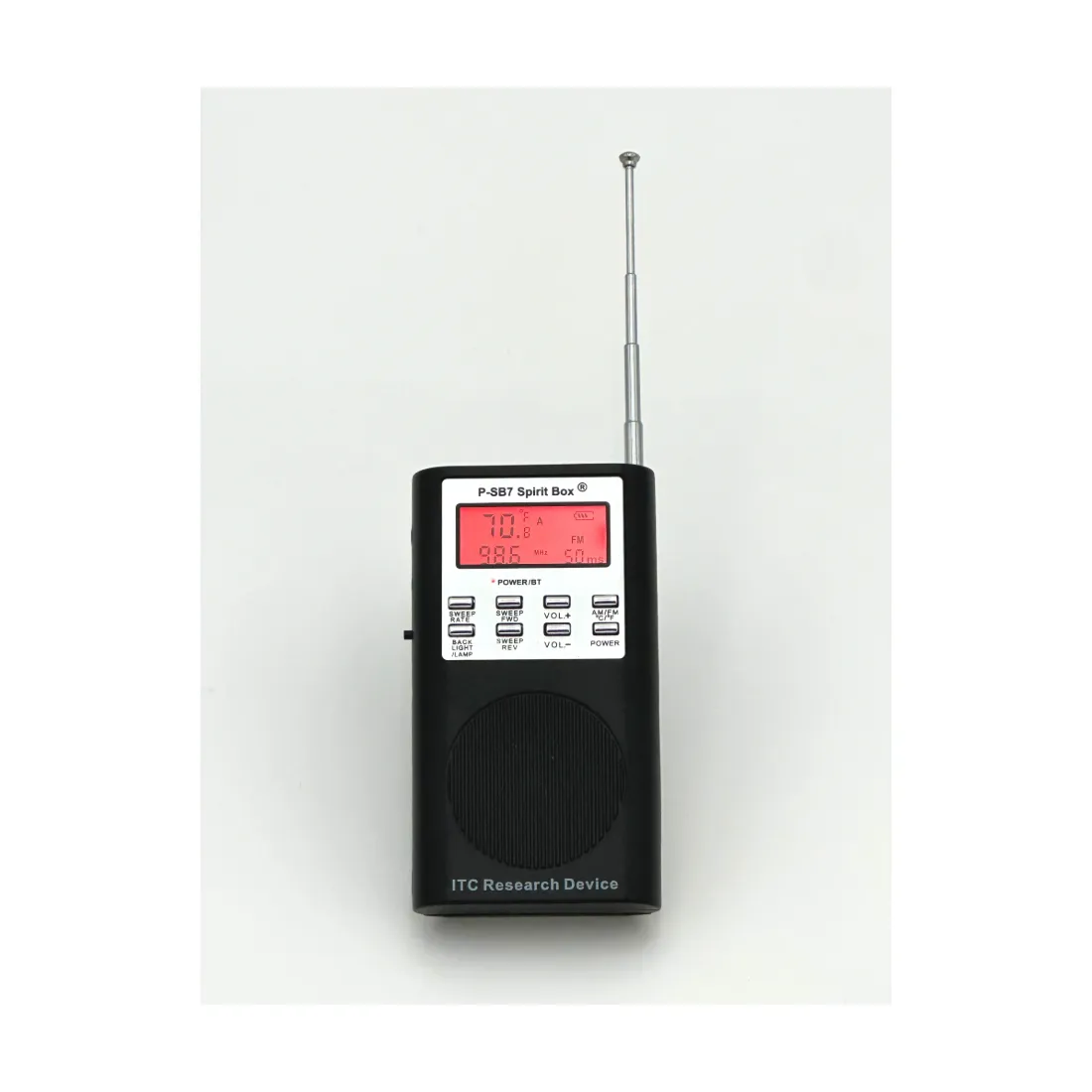
The Wireless P-SB7 Rev 8: What Changed in the Classic Spirit Box
The P-SB7 is the instrument that defined the modern spirit box. I designed it as the first production-built spirit box made specifically for paranormal researchers, and it has been in the field continuously since 2009. The current version is Revision 8, and it brings the biggest practical change in the product's history: it is wireless.
Where the P-SB7 started
The P-SB7 made its debut on Ghost Adventures, live from the Trans-Allegheny Lunatic Asylum, on October 30, 2009. From the moment it was switched on it provided real-time responses to questions across a 40-minute segment of the live show. That night put frequency-sweep ITC in front of a mass audience, and the P-SB7 has been the reference device for the method ever since. Every revision since then has refined the same core idea: a millisecond-adjustable frequency sweep, forward or reverse, with proprietary white noise between the steps.
Watch the Rev 8 with the X1-ANC
What Rev 8 changes
The headline is the wireless audio link. The Rev 8 can send its audio to a speaker like the X1-ANC without a cable between them, which removes the most fragile part of the old field setup: the audio lead that gets snagged, unplugged, or forgotten in a dark building. Fewer cables also means the box and the speaker can sit apart from each other, so you can position the speaker where the group can hear it while the box stays where you want it.
Under the wireless link, the sweep engine is the mature version of the original design:
- Millisecond-adjustable frequency sweep, forward or reverse, with the rate selectable in 7 steps.
- Proprietary white noise between sweep steps.
- An enhanced FM mode that adds 119 frequencies from 76 to 87.9 MHz.
Why the added FM band matters
The enhanced FM band sits below the standard FM broadcast range, and it gives the sweep 119 additional frequencies to work through. More frequencies means more raw audio material passing by in each sweep cycle, which is exactly what the method depends on. Every number above is real and pulled from the instrument. I do not publish a spec I cannot stand behind.
The ecosystem still fits
Because the P-SB7 has been the reference device for so long, the whole accessory line grew up around it. The ANC-Mini connects to its audio output for adjustable noise control, the APF-D Processor works with it for rewind and slow-motion review, and the P-SB7-FP Faraday pouch was designed around its exact shape, with every button still accessible through the wire-interlaced material. A Rev 8 drops straight into all of it.
Is the classic still the right first box?
Yes. My honest advice has not changed: a beginner learns more on a P-SB7 than on a flagship with every control turned up. The Rev 8 keeps the operation simple, and the wireless link makes the first-night setup even simpler than it used to be. Learn what a normal sweep sounds like, run honest sessions, and record everything for review. If you later want adjustable frequency steps and integrated sensors, the PSB7-PRO will still be here. And whichever box you run, keep the method honest: shield out live radio with a Faraday pouch when you want a control, and log what you get.
Compare every model on the Spirit Boxes page.


