How I Judge a Spirit Box Response: A Discernment Checklist
Capturing audio is the easy part of ITC. Any spirit box will fill a recording with fragments and noise. The real work, the part that separates research from wishful listening, is deciding which moments were genuine responses and which were your own ears doing you a favor. After decades of sessions, I judge every candidate response against the same checklist, and I want you to have it.
The anatomy of a moment
Every candidate response has three parts: the question, the silence, and the reply. All three matter. A clear word that answers nothing is just a clear word. A relevant word that arrives two minutes after the question is a coincidence hunting for a story. When I review a session, I am not listening for impressive audio, I am listening for the whole moment: a direct question, a real gap, and a reply that lands inside it.
The checklist
- Relevance. Did it actually answer the question that was asked? Direct answers to direct questions are the strongest category of response there is.
- Timing. Did it arrive in the silence you left, not buried somewhere else in the session where any word could be made to fit some question?
- Clarity without coaching. Can another person hear it without being told what to expect? The moment you say "listen, it says leave now," you have contaminated every listener after you.
- Original form. I share responses in their original, natural form, with no reverb or delay effects. If a response only exists after heavy processing, it does not go in the keep pile.
- Context. What else was happening? What was on the meters, who was in the room, what did you log?
Watch: discernment in a real session
The traps
Skeptics point to pareidolia, the brain's habit of finding words in random noise, and they are right, so build your method around it instead of arguing with it. The worst contamination is priming: one person announces what they heard and suddenly everyone hears it. In my sessions the rule is that each person says what they heard out loud, immediately, before anyone compares notes. Disagreement is information. If three people heard three different things, you probably have noise. If three people independently heard the same word, you have something worth keeping.
Tools and controls that raise the bar
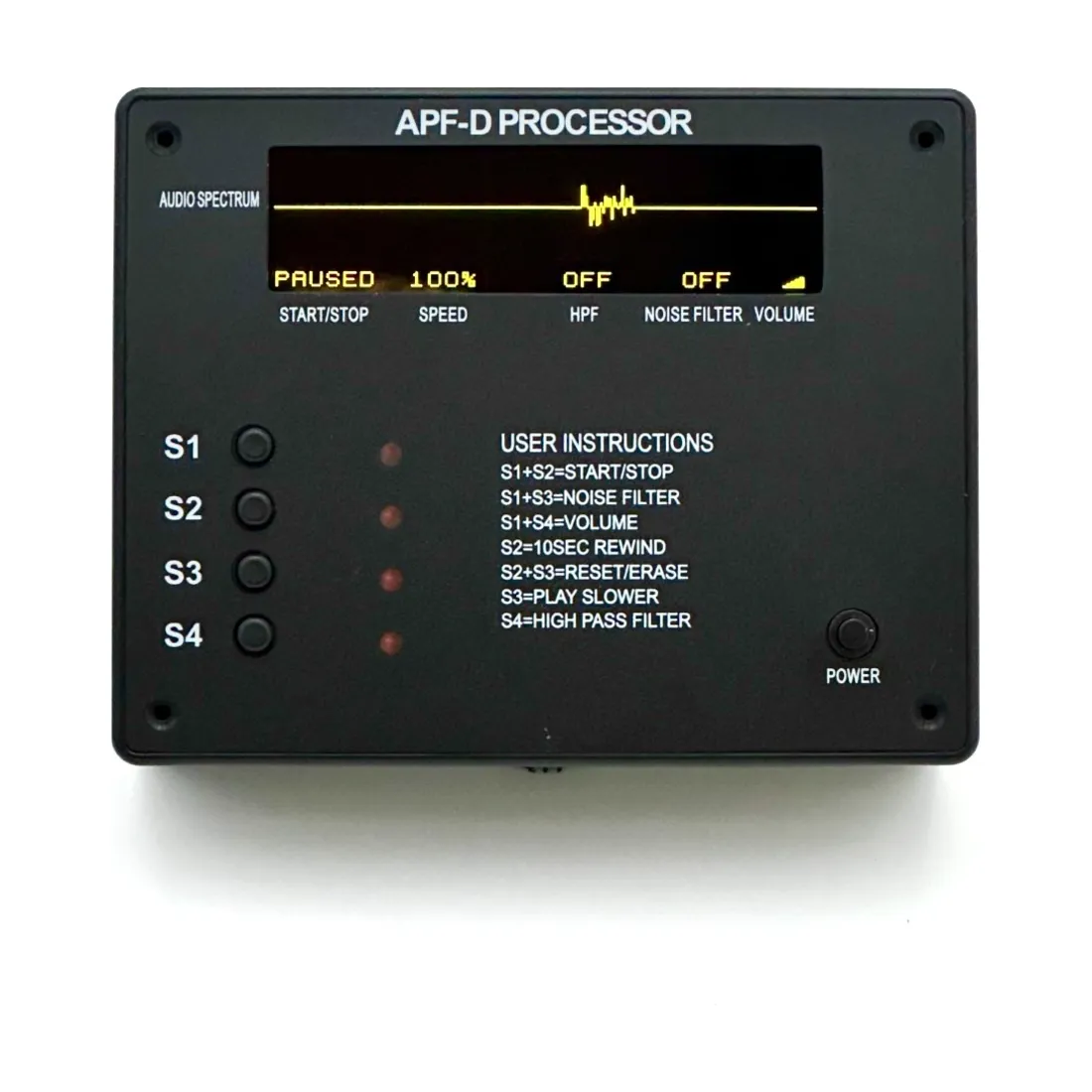
The APF-D Processor earns its place here: rewind the moment in 10-second intervals, slow it down 5 percent at a time, and watch the real-time spectrum display while you listen. A voiced response shows structure on the display, flat noise looks flat, and watching while listening keeps you more honest than ears alone. For controls, run the same rig in an empty room and review it identically, and use a Faraday pouch to attenuate live radio when you want a shielded comparison. Most candidate responses will not survive this checklist. That is the point. The few that do are the ones worth your name being attached to.
Review your sessions with the APF-D Processor, and shield your controls with the P-SB7-FP Faraday pouch.


