Does Language Matter in ITC? Notes from Foreign-Language Experiments
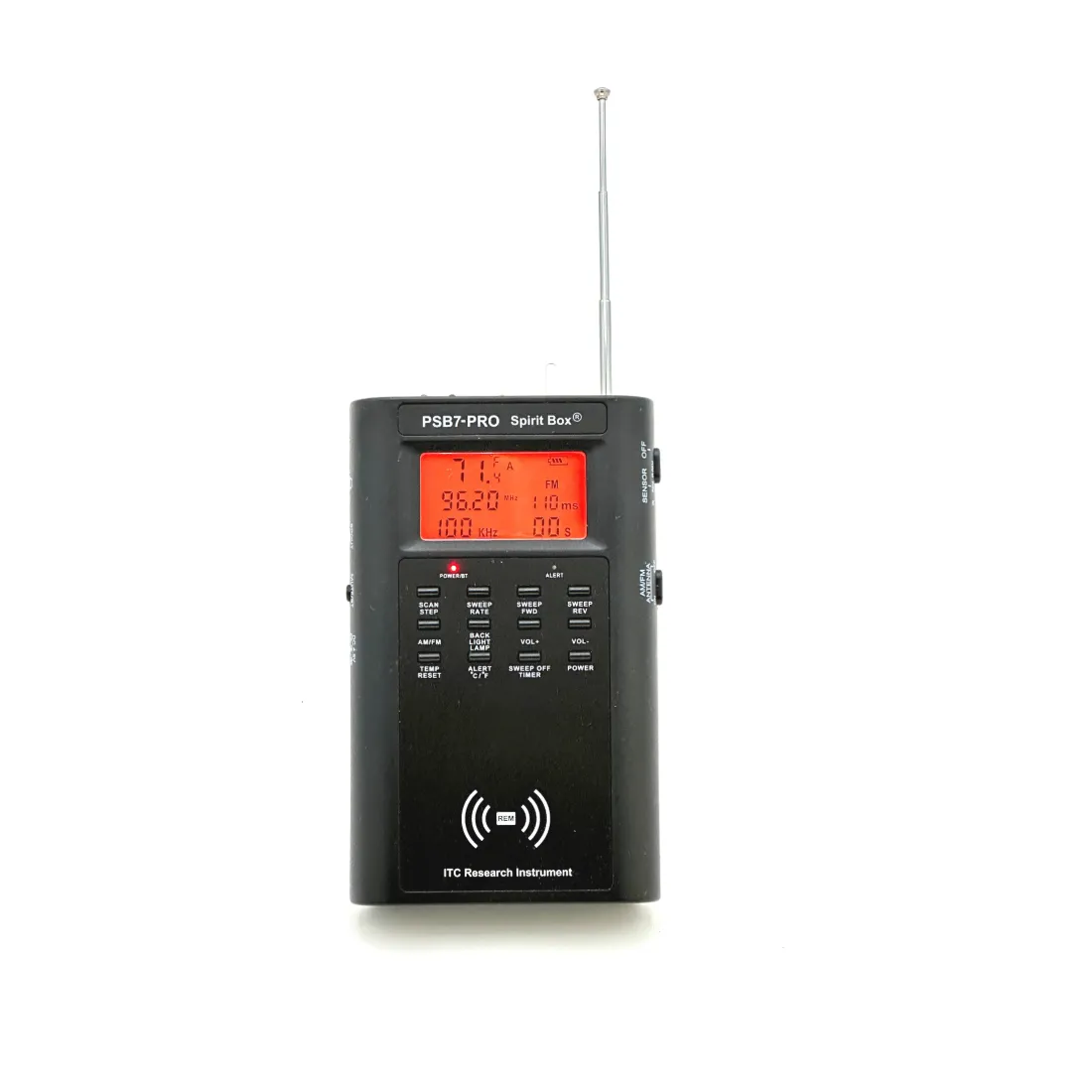
A question I get from researchers overseas: does the spirit box only work in English? It is a better question than it sounds, because it goes straight to how the instrument works. A frequency-sweep spirit box builds its audio from radio broadcasts and white noise, and radio broadcasts speak the local language. That simple fact makes language one of the most interesting experimental variables in ITC, and it is why I have spent time running foreign-language sessions myself.
Where the audio comes from
As the sweep steps across the band, fragments of speech, music, and noise pass by, and a response can form in that changing audio. In an American living room, those fragments are mostly English. In Beijing they are mostly Mandarin. If responses were nothing but re-heard radio, you would expect them to track the language of the strongest local stations, every time. So a session where the responses cross languages, or arrive in a language the local band should not be carrying, is worth studying carefully. It does not prove anything on its own, but it is exactly the kind of data the method should collect.
The experiment
In the video below I experiment with conversion between Chinese and English during an ITC session. I will not tell you what to hear. That is deliberate. Listen first, form your own judgment, and then think about what would strengthen or weaken the result. That is the habit I want every researcher to build.
Watch the experiment
The honest complication
Here is the part a careful researcher has to face: pareidolia gets worse across languages, not better. When your brain hears unfamiliar syllables, it maps them onto the nearest words it knows, which means an English speaker can find English words inside foreign speech fragments that contain no English at all. Skeptics are right about this, and it cuts directly against naive cross-language claims. So the standard of evidence has to go up, not down, when language enters the experiment.
How to run a language experiment honestly
- Recruit a native speaker of each language involved, and have them review the recording blind, without being told what anyone else heard.
- Write down your question and the time you asked it, so relevance and timing can be checked afterward, not remembered.
- Attenuate live broadcast radio with a Faraday pouch so you can compare shielded and unshielded runs of the same session.
- Record everything, keep responses in their original natural form with no effects, and archive the sessions where nothing happened too. Negative results are data.
Run it that way and the experiment is worth something no matter which way it comes out. A response that survives a blind native-speaker review under shielded conditions is genuinely interesting. One that dissolves under that review taught you something about your own ears. Either way, you did research instead of wishful listening. The video above is one of a series of language experiments I have recorded, and I would rather you watch them critically than take my word for any of it.
Start with a spirit box, and add the P-SB7-FP Faraday pouch when you are ready to run controls.


